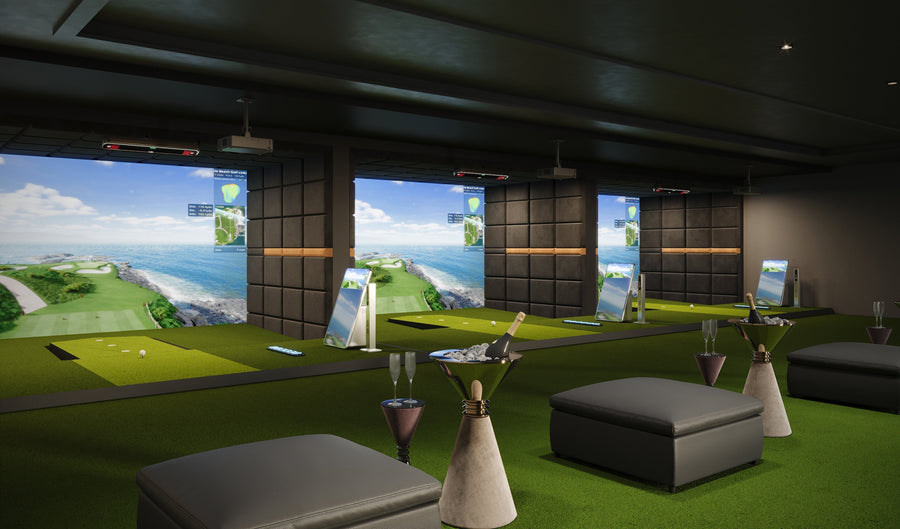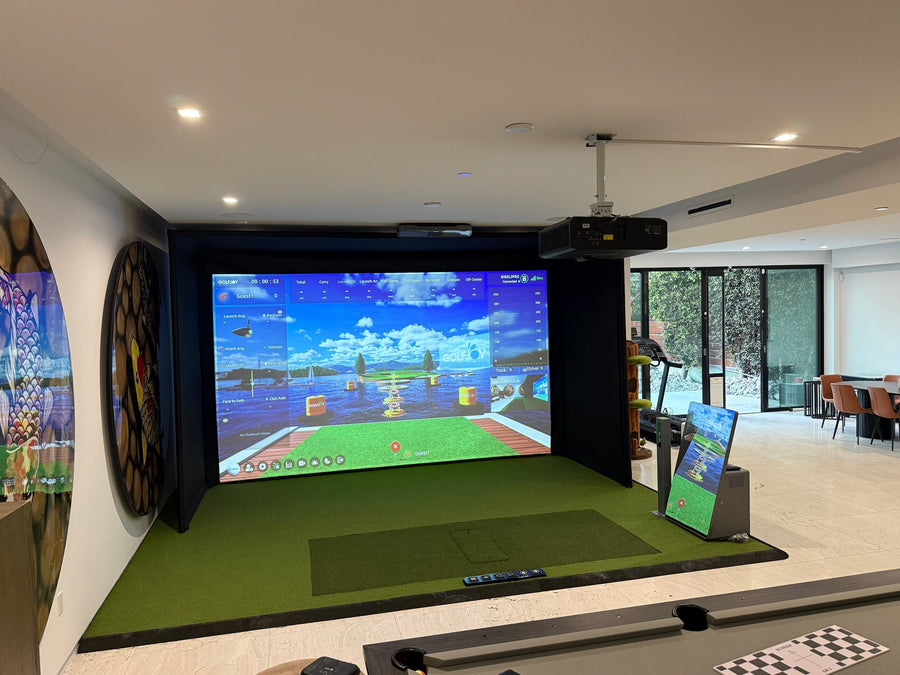





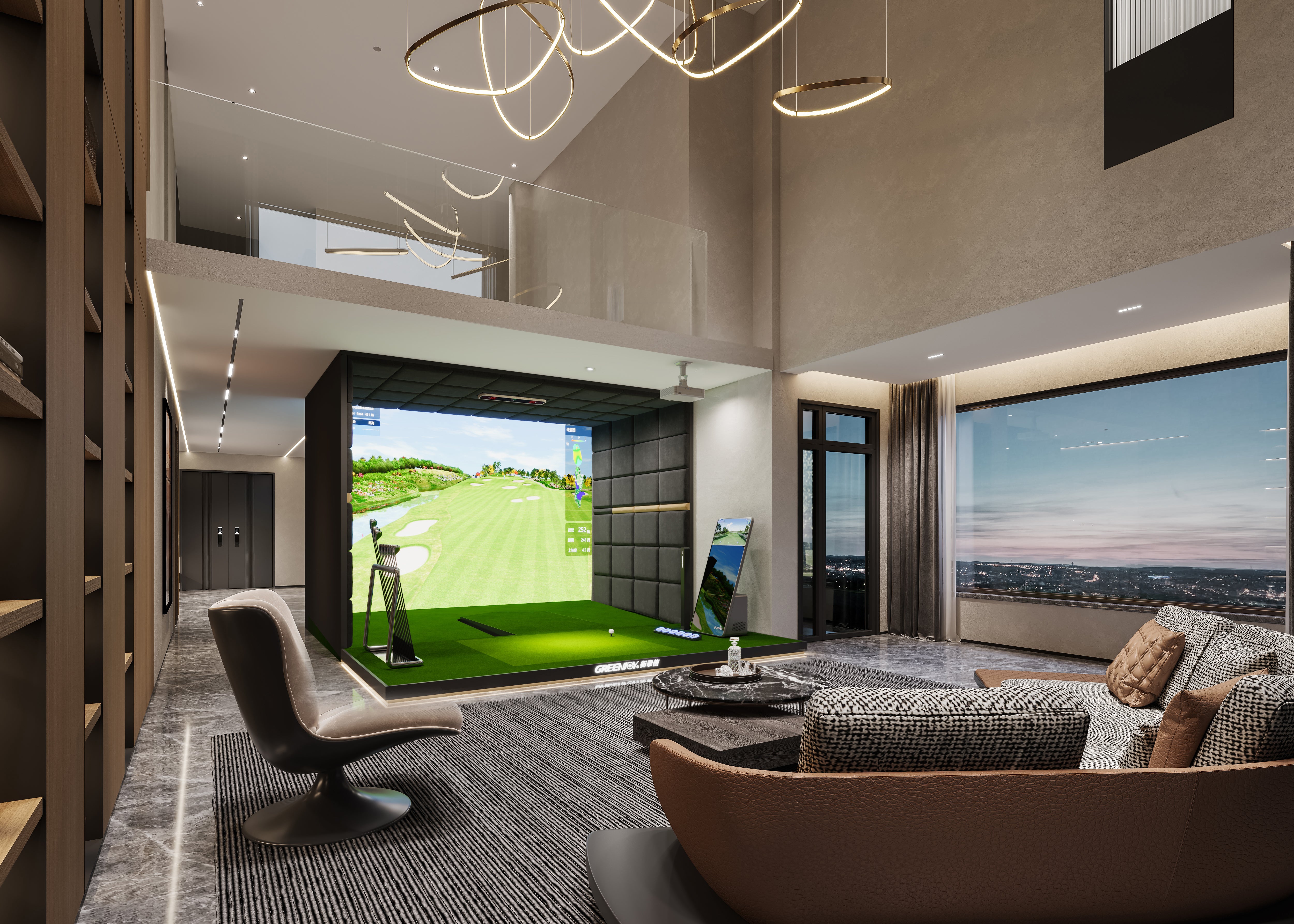
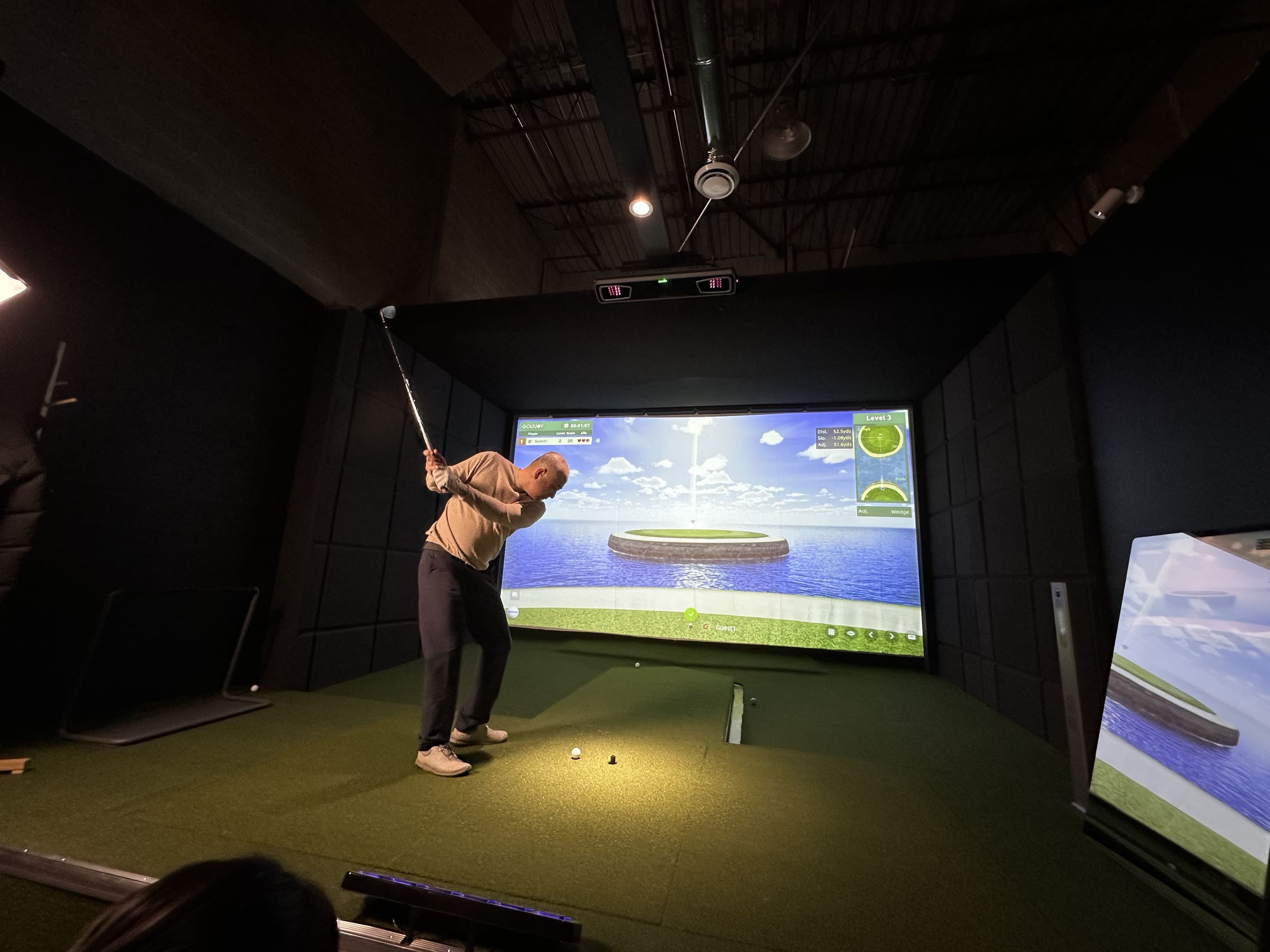
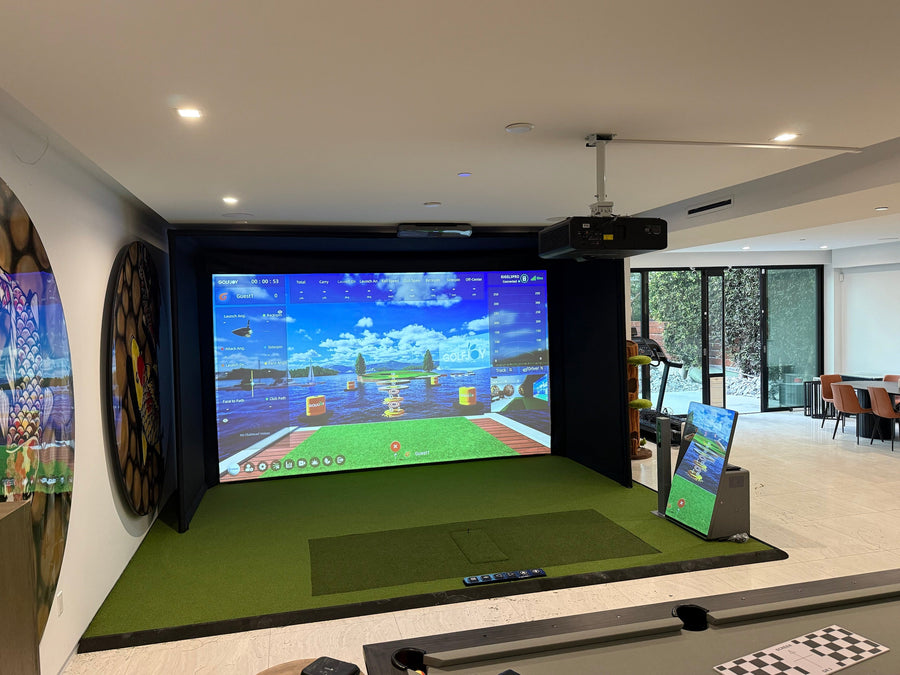
A complete setup can range from about $1,000 to more than $50,000, depending on its tracking technology, components, installation requirements, and intended use. A basic home golf simulator may cost a few thousand dollars, while a fully equipped commercial system can reach tens of thousands. The total investment is mainly shaped by the launch monitor, software, impact screen, enclosure, projector, computer, and installation environment.
The average price of a golf simulator varies widely based on performance level and application.
Here’s a general breakdown:
| Simulator Level | Typical Price Range | Common Use |
|---|---|---|
| Entry-Level | $1,000–$3,000 | Casual practice, nets, and basic portable setups |
| Mid-Range | $3,000–$10,000 | Structured home practice and compact indoor simulator rooms |
| High-End Home | $10,000–$25,000+ | Dedicated home installations with premium tracking and projection |
| Commercial | $25,000–$40,000+ | Studios, clubs, entertainment venues, and high-traffic facilities |
A complete golf simulator system typically includes hardware, software, and accessories, all of which contribute to the total cost. Lower-cost options can suit casual practice, while more advanced systems generally provide deeper data, a more immersive playing environment, and equipment designed for heavier long-term use.
For most users, the biggest question is: how much does a home golf simulator cost?
A typical residential golf simulator setup ranges from:
A personal indoor golf simulator often includes:
More advanced users may also invest in indoor golf simulator software to unlock additional features such as virtual courses, practice modes, and multiplayer gameplay.
Systems developed by GOLFJOY are designed to scale across different budgets, making it easier for users to start with the components they need and expand over time. Golfers planning a dedicated practice room can explore GOLFJOY home and indoor golf simulator solutions for space planning, equipment options, and complete residential setups.
If you're considering a simulator for business use, the investment is significantly higher.
A typical commercial indoor golf simulator costs:
The commercial golf simulator price includes more than just equipment. It often covers:
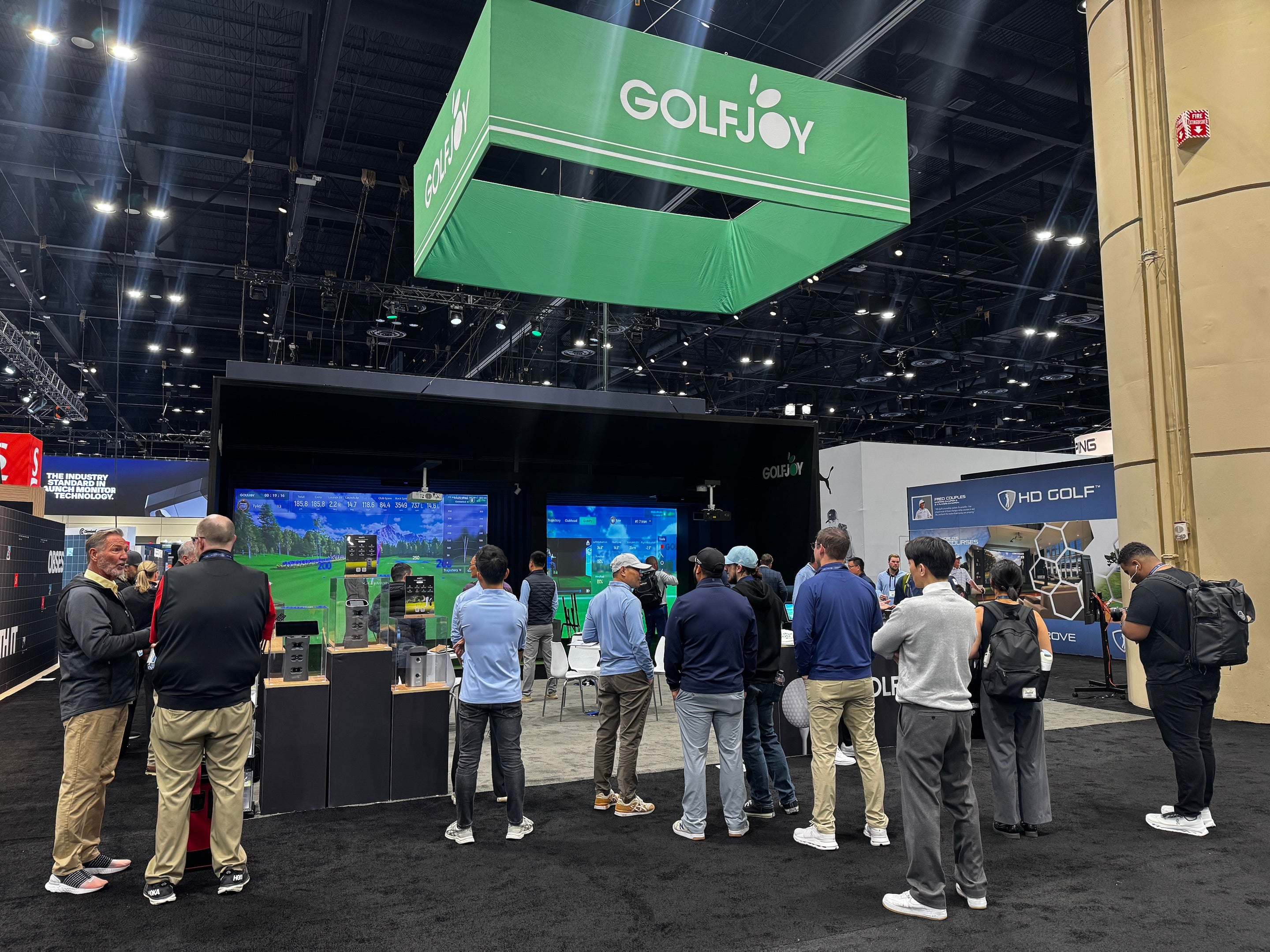
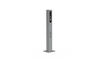
GOLFJOY's Commercial Simulator uses overhead Rigel Series launch monitors — high-speed camera sensors mounted above the hitting area — providing unobstructed tracking suited to multi-player, high-traffic environments. For large-scale projects such as driving ranges, urban golf centers, and full golf facilities, GOLFJOY also offers fully customized design and installation services.
To better understand where your money goes, let’s break down the main components of a golf simulator.
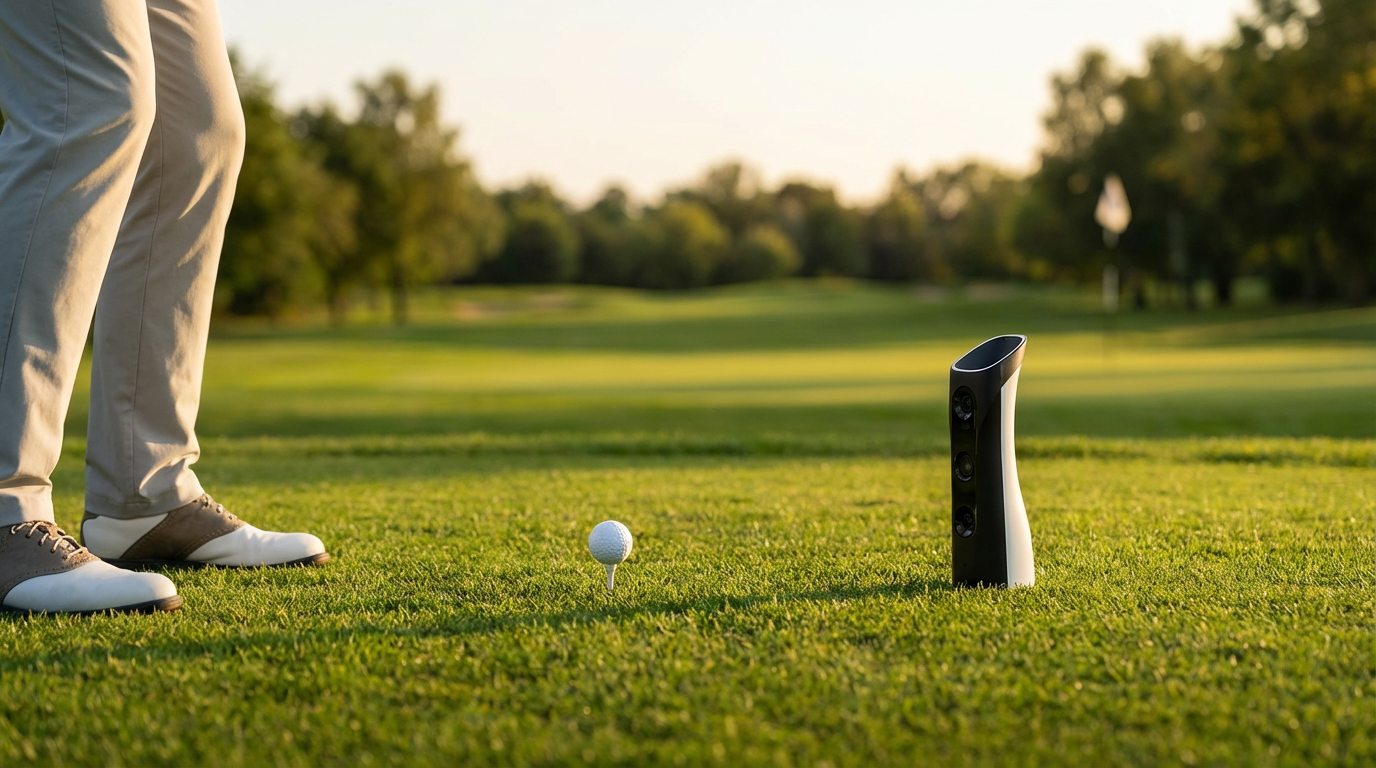
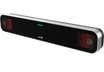
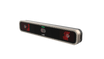
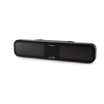
The launch monitor is the most important and often the most expensive component.
GOLFJOY's Rigel series includes overhead launch monitors that use high-speed camera technology for fixed indoor installations. Portable options such as the GDS PRO and Spica 3 support different room layouts and practice requirements. Compare the available GOLFJOY launch monitors to determine which tracking format best fits your space and intended use.
The impact screen is where the ball is hit and the simulation is displayed.
Durability and image quality are the key factors. A good impact screen should withstand repeated direct hits while delivering a clear, bright projection surface.
Software determines the realism and features of your simulator.
Many users choose indoor golf simulator software that supports realistic ball flight, practice modes, course libraries, and multiplayer play. Software choice can also affect long-term cost because licenses, updates, and course access may be priced separately.
An enclosure enhances immersion and safety.
A complete enclosure is often used in commercial golf simulators to create a premium user experience.
Choosing between a budget and premium system depends on your goals.
Best for:
Advantages:
Limitations:
Some users choose a portable golf simulator setup in this category for flexibility and easier storage. A dedicated residential indoor golf simulator may be a better fit when year-round practice, projection, and a permanent hitting area are priorities.
Best for:
Advantages:
Premium setups often integrate a launch monitor, simulator software, projection system, impact screen, and room design into one connected home golf simulator solution.
Whether a golf simulator is worth it depends on how often you plan to use it and your goals.
A simulator offers:
For golfers who practice frequently, a personal indoor golf simulator can provide convenient year-round access and greater control over practice time. Its value depends on usage frequency, available space, equipment quality, and long-term training goals.
For commercial users, simulators can generate revenue through:
This makes golf simulators for business a strong investment opportunity when paired with the right location and marketing strategy.
Beyond cost, simulators provide:
According to the National Golf Foundation, off-course golf participation—including simulators—continues to grow, highlighting their increasing importance in the modern golf ecosystem.
The best system is not always the one with the highest price. It is the setup that matches your room dimensions, practice goals, required data, preferred software, and expected usage. Before purchasing, compare the full cost of the launch monitor, screen, enclosure, projector, computer, software, shipping, and installation rather than evaluating one component alone.
Explore GOLFJOY home and indoor golf simulator solutions for residential practice spaces, or review commercial golf simulator solutions for studios, clubs, and entertainment venues.
Golf simulators typically range from $1,000 to over $50,000, depending on features and quality.
A home setup commonly ranges from about $2,000 to $15,000, while premium custom rooms may cost more. The final price depends on whether the system includes only tracking hardware or a complete screen, enclosure, projector, computer, software, and installation package. Explore GOLFJOY home golf simulator solutions for different residential configurations.
Many complete home systems fall between $5,000 and $15,000, but the right budget depends on the required tracking data, room design, software, screen quality, and expected frequency of use. Compare the complete system rather than choosing by price alone.
Commercial systems typically range from $15,000 to $70,000 or more depending on complexity, number of bays, and customization. GOLFJOY offers custom quotes for venue and driving range projects.
They can be useful for beginners and casual players, but typically trade accuracy and data depth for affordability. If long-term improvement is the goal, a mid-range system with quality tracking hardware is a better investment.
The launch monitor is usually the most expensive component, as it determines the accuracy of the entire system.
Submit your information and our team will follow up with you.